

Kiran Infertility Center Hyderabad

Kiran Infertility Center – Hyderabad

Sai Kiran Hospitals - Unit of Kiran Infertility Center

Assisted Hatching Treatment

On your family-building journey, every step of the In Vitro Fertilization (IVF) process is carefully planned to optimize your chances of success. Assisted Hatching is an advanced laboratory technique that may support embryo implantation and improve the likelihood of achieving a successful pregnancy.

What is Assisted Hatching?

In the early stages of development, an embryo is surrounded by a protective outer layer known as the zona pellucida. For implantation to occur, the embryo must naturally break out or “hatch” from this shell in order to attach to the uterine lining.

Assisted Hatching is a highly specialized procedure in which our embryologists create a small opening in this outer layer, helping the embryo hatch more easily and potentially improving implantation outcomes.

How Does the Procedure Work?

Using advanced microscopic technology, our experienced embryology team carefully stabilizes the embryo and creates a precise opening in the zona pellucida. This is performed using either a controlled chemical method or a highly accurate laser technique.

The embryo is then carefully prepared for transfer into the uterus. Assisted Hatching is most commonly performed at the blastocyst stage (day 5–6 of development), which is considered optimal for implantation.
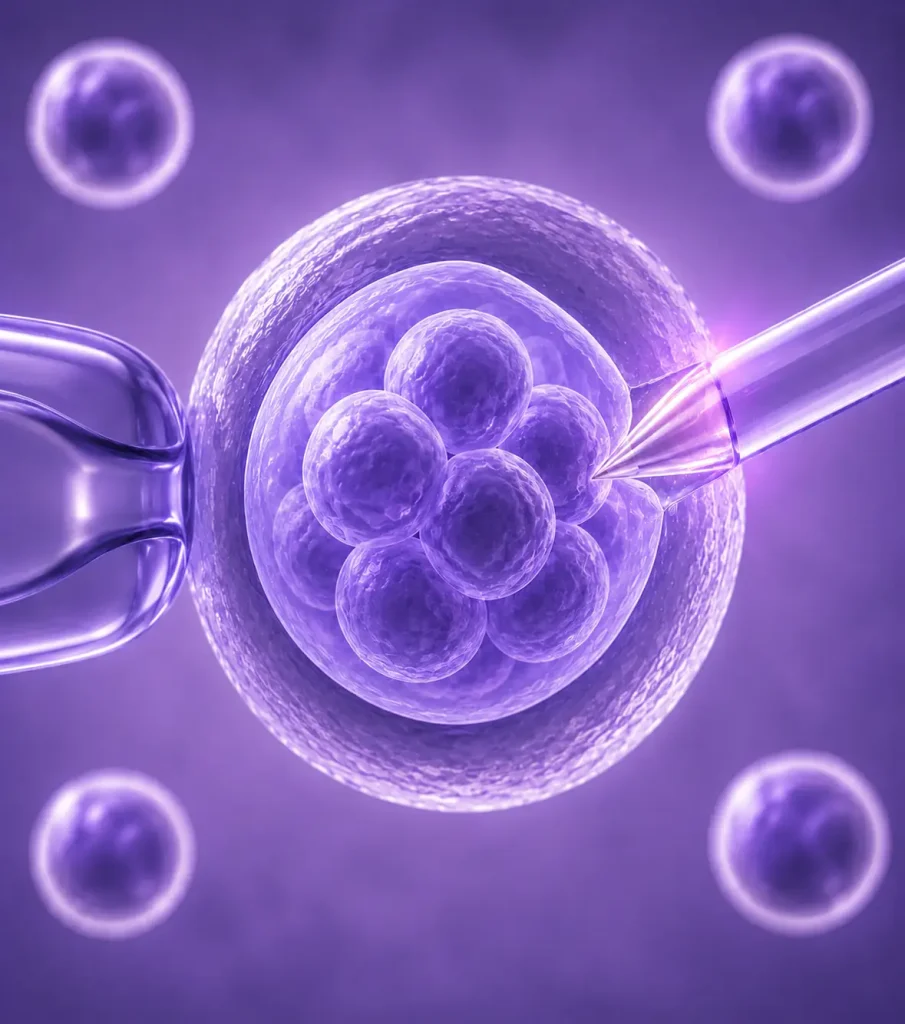

Assisted Hatching Treatment

Who May Benefit from Assisted Hatching?

Assisted Hatching is not required in all IVF cases but may be recommended in specific situations, including:

  • Women of advanced maternal age (typically over 38)
  • Couples with previous unsuccessful IVF attempts
  • Embryos with a thicker outer shell (zona pellucida)
  • Cases where embryo quality may affect implantation

Your doctor will assess your individual case and advise whether Assisted Hatching would be beneficial as part of your personalized treatment plan.

IVF Center in Hyderabad

Benefits

For selected patients, Assisted Hatching may:

  • Improve the embryo’s ability to implant
  • Increase the likelihood of a successful pregnancy
  • Support outcomes in more complex fertility cases

Considerations

As with any delicate laboratory procedure, there are important considerations:

  • A very small risk of damage to the embryo
  • A slightly increased chance of identical (monozygotic) twins

Expertise You Can Trust

At Kiran Infertility Clinic, we combine advanced technology with extensive clinical expertise to deliver the highest standards of fertility care. Assisted Hatching is performed by our highly skilled embryology team using precise, state-of-the-art techniques.

We are proud to highlight that Dr. Manash Kumar Bhattacharyais recognized as one of the most experienced embryologists in the country for performing this delicate procedure. Her expertise reflects the level of precision, skill, and excellence that defines our laboratory standards.

Every treatment plan is tailored to your unique medical profile, ensuring that you receive the most appropriate and effective approach for your journey.

We are committed to guiding you with clarity, transparency, and compassionate support at every stage—helping you move forward with confidence on your path to building your family.

Take the Next Step Towards Building Your Family
Every family-building journey is unique. Our experienced fertility and embryology team provides advanced laboratory techniques, personalised guidance and compassionate support based on your individual treatment needs.

Our fertility team is here to answer your questions, discuss your treatment options, and provide the guidance and support you need throughout your family-building journey.
Email us at info@kiranivfgenetic.com to start the conversation.

Frequently Asked Questions

1. What is Assisted Hatching?

Assisted Hatching is a specialized laboratory technique used during IVF in which embryologists create a small opening or thinning in the embryo’s protective outer layer, known as the zona pellucida. This is intended to help the embryo hatch more easily before implantation.

2. How is Assisted Hatching performed?

Assisted Hatching is performed under advanced microscopic technology by experienced embryologists. The embryo is carefully stabilized before a precise opening is created in the zona pellucida, most commonly using a highly accurate laser technique. Depending on the laboratory approach, other controlled techniques may also be used.

3. Who may benefit from Assisted Hatching?

Assisted Hatching is not required for every IVF patient but may be considered in selected cases. It may be recommended for women of advanced maternal age, couples who have experienced previous unsuccessful IVF attempts, embryos with a thicker zona pellucida, or cases where individual embryo characteristics may affect implantation.

4. Can Assisted Hatching improve the chances of pregnancy?

Assisted Hatching may potentially support the embryo’s ability to implant and may be considered as part of treatment for selected patients. However, it does not guarantee implantation or pregnancy, and the potential benefit depends on individual clinical and embryological factors.

5. Is Assisted Hatching safe?

Assisted Hatching is a delicate procedure performed by experienced embryologists using precise laboratory techniques. There is a very small risk of damage to the embryo during the procedure, and there may also be a slightly increased chance of identical (monozygotic) twins. Your fertility specialist will assess your individual circumstances and discuss whether Assisted Hatching is appropriate for you.

Call Now Button