

Frequently Asked Questions
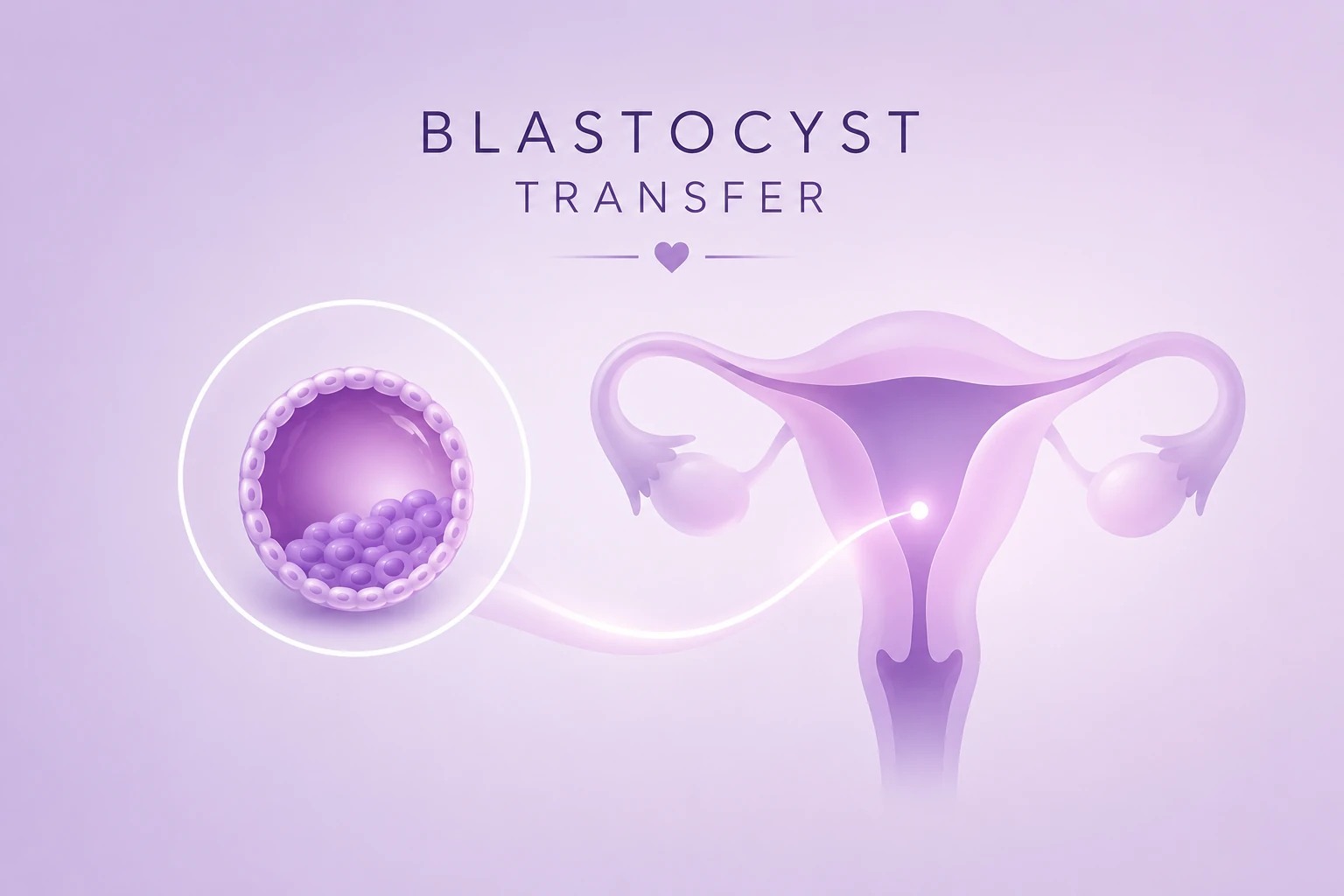
A blastocyst transfer involves transferring an embryo to the uterus after it has developed in the laboratory for approximately five to six days following fertilization.
Culturing embryos to the blastocyst stage gives embryologists more time to observe their development and helps with embryo selection. It may also support the use of single embryo transfer, which can reduce the risk of multiple pregnancy.
No. Not every embryo will continue developing to the blastocyst stage. Our embryologists closely monitor embryo development and advise on the most appropriate transfer approach based on the embryos available.
Blastocyst culture may be recommended depending on factors such as the number and quality of embryos, age, previous IVF treatment and the individual treatment plan. Your fertility specialist will determine whether blastocyst culture is appropriate for you.
No. Although blastocyst transfer can offer important advantages for embryo selection, it does not guarantee implantation or pregnancy. Individual outcomes depend on several factors related to the embryo, uterus and overall fertility circumstances.