
What is PGD?
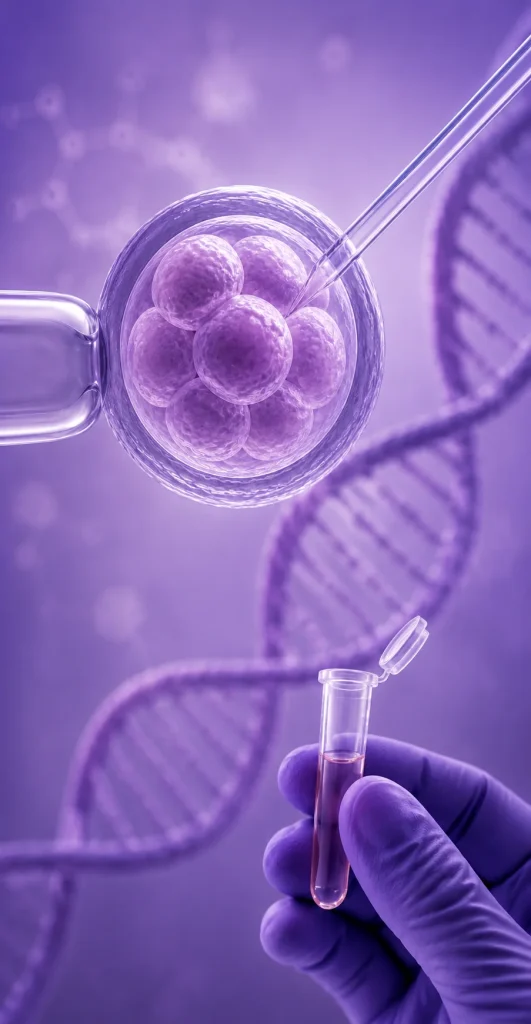
PGD involves carefully examining the chromosomes and genes of embryos created through IVF before they are transferred to the uterus. The main goal is to help identify embryos that are free of specific genetic disorders you may be concerned about, allowing for the transfer of an embryo with the best possible chance of developing into a healthy baby.
How Does PGD Work?
The process begins with a standard IVF cycle to create embryos. Around day 5 or 6 of development, when embryos reach the blastocyst stage, a few cells are gently removed for testing. This biopsy is performed with precision to minimize impact on the embryo. The cells are then analysed in a specialized laboratory to screen for specific genetic conditions or chromosomal abnormalities.
Who Can Benefit from PGD?
PGD may be recommended for couples at risk of passing on inherited genetic conditions, including:
- Single Gene Disorders: Such as cystic fibrosis, sickle cell disease, Huntington’s disease, or muscular dystrophy.
- Chromosomal Conditions: Such as balanced translocations, which can affect embryo development.
This technology is particularly valuable for couples who have a known family history of genetic diseases and wish to avoid passing these conditions to their children.