
KIC NEW

Kiran Infertility Centre – Hyderabad

Sai Kiran Hospitals - Unit of Kiran Infertility Centre

Embark On Your Journey To Parenthood With Confidence And Joy With Our Top-Notch IVF Treatment

IVF A Pathway To Your Parenthood Dreams

What Is IVF?

IVF stands for In Vitro Fertilization, which is a type of assisted reproductive technology (ART). IVF is a process where eggs and sperm are combined in a laboratory to create embryos. The embryos are then transferred to the uterus, where they can grow into a baby. IVF is one of the most common and effective forms of ART. It has helped millions of people around the world to overcome their fertility challenges and achieve their parenthood dreams.

IVF can help people who have difficulty conceiving naturally due to various reasons. IVF can also help people who need to use donor eggs or sperm, or who need a gestational carrier (surrogate) to carry the pregnancy. IVF can offer you the opportunity to have a biological or genetic connection with your child, or to share the pregnancy experience with someone who can help you.

Why Choose Us For Your IVF Journey?

We are a leading fertility clinic that specializes in IVF and Altruistic Surrogacy. We have been providing quality fertility care since 1980. We have a team of experienced and qualified doctors, embryologists, nurses, and counsellors who are dedicated to helping you achieve your parenthood dreams. We treat every patient with compassion and empathy, and we tailor our treatments to your needs.

We have a high success rate and a low complication rate. We use the latest technology and equipment to ensure the safety and quality of our procedures. We follow the ethical and legal standards of our profession and respect your privacy and confidentiality.

We are here to help you achieve your dream of having a baby. Please reach out to us for more details or to book an appointment. We would be honored to be part of your miracle and share this amazing experience with you.

How to get started with IVF?

If you are interested in IVF, the first step is to contact us and schedule a consultation. We will evaluate your medical history, perform some tests, and discuss your options and expectations. We will also explain the IVF process in detail, including the steps, risks, costs, and success rates.

We will design a personalized treatment plan for you, based on your needs and preferences. We will guide you through every stage of the IVF process, from stimulation to transfer to pregnancy test and Ante natal care. We will provide you with the best care and support throughout your journey.

IVF Made Easy

A Simple & Clear overview of the Process

If you are planning to undergo IVF, you may have some questions about the process and the steps involved. Here is a brief overview of what to expect from an IVF cycle with us.

How to get started with IVF?

You will visit our clinic on day 1 or 2 of your period. A medical consultant will guide you on your next visit and the IVF cost in Hyderabad for the first injections. Your IVF cycle will start with either Antagonist or down-regulated injections, depending on your case. The doctor will explain the best option for you. We customize our IVF treatment to meet your specific needs and wishes.

IVF Medications

To increase the chance of obtaining a pregnancy, we aim to stimulate your ovaries to produce optimal number of oocytes/eggs. We use the best quality fertility drugs to achieve this goal. Your medication plan will be customized to suit your needs, but most IVF regimens include one or more of the following:

  • HMG (Human Menopausal Gonadotropin): This drug is administered by intramuscular injection and stimulates the ovaries to produce eggs.
  • Recombinant FSH: This drug is a synthetic form of follicle-stimulating hormone and stimulates the ovaries to produce eggs.

Patient Monitoring

We monitor the growth and development of your eggs by repeated ultrasound scans and blood tests for hormone levels (Estradiol and Progesterone). You will be advised to come to our clinic for blood tests and scans to determine the maturity of your developing eggs starting from cycle day 3, 5, 7 or 9. Then further monitoring will be done as needed until the eggs are ready. Sometimes, you may need daily monitoring near the end of the ovarian stimulation phase of the cycle.

Blood Tests

You will have to undergo two or three blood tests during the monitoring process. We measure your Estradiol (Estrogen) and Progesterone levels to assess the maturity and quality of your eggs. Usually, the test shows between 100 and 200 units of estrogen for every mature egg. Progesterone tells us if the eggs are becoming overripe. Your progesterone level, which depends on the number of egg follicles created, should generally be below two units.

Sonograms

We use vaginal ultrasound to check the maturity of the follicles developing in your ovaries. This is a painless procedure, where a small probe is inserted in your vagina. This allows us to see your ovaries and your uterus, to evaluate the thickness of your endometrium (the inner lining of the uterus), and to count and measure the follicles developing in each ovary. A mature follicle measures from 18 to 22 millimeters. We also use an advanced technology of Color Doppler to monitor the blood flow in the follicle and the endometrium.

The Final Step to Egg Maturation

When the blood tests and sonograms indicate that your eggs are mature (size of 18mm or more), you will be given a final injection called HCG (Human Chorionic Gonadotropin) to complete the maturation process of the egg. The HCG shot must be taken preferably at our clinic on the specified date, and the egg retrieval is scheduled later after around 36 hours after the HCG injection. (Example: if your Monday monitoring showed your follicles to be of the appropriate size and your estrogen levels were found to correlate with maturity, you would be instructed to take your HCG between 9:00 PM and 11:00 PM Monday evening. Your egg retrieval will then be performed on Wednesday morning at our clinic.

Embryo Development and Transfer

After the retrieval of eggs and the collection of sperm, our embryologists will expertly combine them in a controlled laboratory setting. This process is aimed at creating viable embryos. We monitor these embryos closely to select the most promising ones for transfer. When the embryos reach the optimal stage, usually between 5 to 6 days after fertilization we shall freeze them at Blastocyst stage and grade them according to their quality. We shall usually schedule the transfer procedure in the next cycle to maximise the chance of pregnanc. Our goal is to transfer the embryos safely into the uterus, where they have the potential to implant and develop into a healthy pregnancy.

Patient Monitoring

We monitor the growth and development of your eggs by repeated ultrasound scans and blood tests for hormone levels (Estradiol and Progesterone). You will be advised to come to our clinic for blood tests and scans to determine the maturity of your developing eggs starting from cycle day 3, 5, 7 or 9. Then further monitoring will be done as needed until the eggs are ready. Sometimes, you may need daily monitoring near the end of the ovarian stimulation phase of the cycle.

Blood Tests

You will have to undergo two or three blood tests during the monitoring process. We measure your Estradiol (Estrogen) and Progesterone levels to assess the maturity and quality of your eggs. Usually, the test shows between 100 and 200 units of estrogen for every mature egg. Progesterone tells us if the eggs are becoming overripe. Your progesterone level, which depends on the number of egg follicles created, should generally be below two units.

Sonograms

We use vaginal ultrasound to check the maturity of the follicles developing in your ovaries. This is a painless procedure, where a small probe is inserted in your vagina. This allows us to see your ovaries and your uterus, to evaluate the thickness of your endometrium (the inner lining of the uterus), and to count and measure the follicles developing in each ovary. A mature follicle measures from 18 to 22 millimeters. We also use an advanced technology of Color Doppler to monitor the blood flow in the follicle and the endometrium.

The Final Step to Egg Maturation

When the blood tests and sonograms indicate that your eggs are mature (size of 18mm or more), you will be given a final injection called HCG (Human Chorionic Gonadotropin) to complete the maturation process of the egg. The HCG shot must be taken preferably at our clinic on the specified date, and the egg retrieval is scheduled later after around 36 hours after the HCG injection. (Example: if your Monday monitoring showed your follicles to be of the appropriate size and your estrogen levels were found to correlate with maturity, you would be instructed to take your HCG between 9:00 PM and 11:00 PM Monday evening. Your egg retrieval will then be performed on Wednesday morning at our clinic.

Embryo Development and Transfer

After the retrieval of eggs and the collection of sperm, our embryologists will expertly combine them in a controlled laboratory setting. This process is aimed at creating viable embryos. We monitor these embryos closely to select the most promising ones for transfer. When the embryos reach the optimal stage, usually between 5 to 6 days after fertilization we shall freeze them at Blastocyst stage and grade them according to their quality. We shall usually schedule the transfer procedure in the next cycle to maximise the chance of pregnanc. Our goal is to transfer the embryos safely into the uterus, where they have the potential to implant and develop into a healthy pregnancy.

Patient Monitoring

We monitor the growth and development of your eggs by repeated ultrasound scans and blood tests for hormone levels (Estradiol and Progesterone). You will be advised to come to our clinic for blood tests and scans to determine the maturity of your developing eggs starting from cycle day 3, 5, 7 or 9. Then further monitoring will be done as needed until the eggs are ready. Sometimes, you may need daily monitoring near the end of the ovarian stimulation phase of the cycle.

Blood Tests

You will have to undergo two or three blood tests during the monitoring process. We measure your Estradiol (Estrogen) and Progesterone levels to assess the maturity and quality of your eggs. Usually, the test shows between 100 and 200 units of estrogen for every mature egg. Progesterone tells us if the eggs are becoming overripe. Your progesterone level, which depends on the number of egg follicles created, should generally be below two units.

Our Team – Experts Dedicated to Helping You Build Your Family

Dr Kiran D Sekhar

MDDGO
Senior Consultant- Gynaecology & Female Fertility
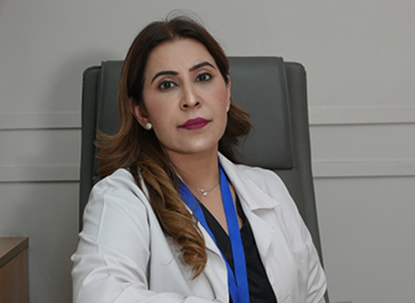
Dr Pratima Sekhar

MD – Obs&Gyn
Female Fertility Specialist&Consultant Gynaecologist

Dr Samit Sekhar

M.B.B.S., Masters of Men’s Health &Andrology (Australia)
Senior Consultant- Gynaecology &Female Fertility

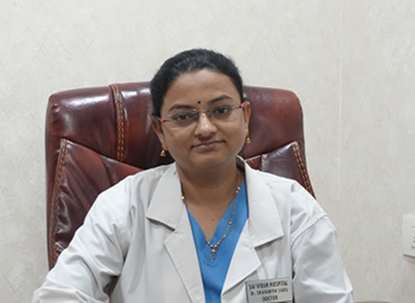
Dr Sravanthi Sadu

Obstetrician and Gynaecologist
Fertility consultant

S.R. Om Prakash

M.sc Chemistry, IVF Trained in TANUVAS
Senior Embryologist
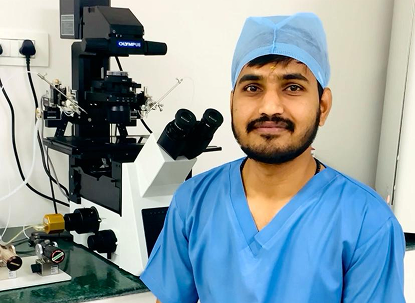
Vishwanath Doddi

M.Sc. Biotechnology
Embryologist

Your Story Matters — And We’re Honored to Be Part of It

Be inspired by the journeys of parents who overcame challenges and found success with our guidance and care.

Footage

Call Now Button